The Sanctuary of the Mind: How to Build Sanctuaries of Disconnection.

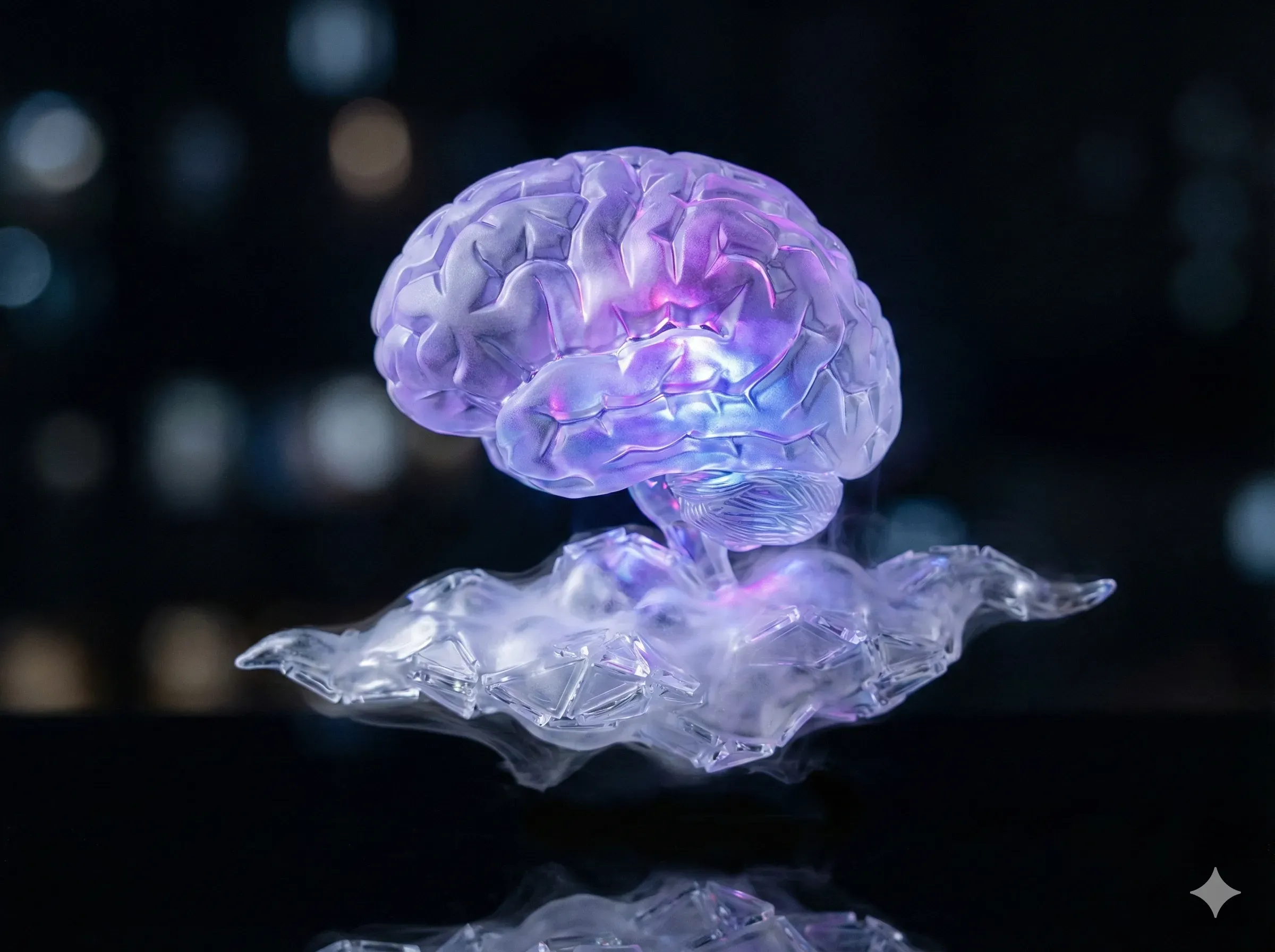
If we allow the student to use the forklift (AI) during the test of strength, we are not measuring the muscle; we are measuring the machine.
A degree certificate is, structurally speaking, a promise. It is a signal sent by a university to society—to employers, to patients, to citizens—guaranteeing that a specific biological individual possesses a specific internal state of cognition. It promises that this person can think, solve, and create.
For the last three years, that promise has been teetering on the edge of fraud.
Since the explosion of generative AI, the global university system has been engaged in a losing arms race. We assign essays; the students use AI to write them. We use AI detectors to catch them; the students use AI “humanizers” to evade detection. We retreat to online proctoring; the students use hardware hacks to bypass the gaze.
We are currently certifying ghosts. When a graduate walks across the stage in 2026, we do not know—truly know—if the competence sits within their brain or within their subscription to a Large Language Model.
To save the credibility of the university credential, we must stop trying to police the digital environment. We must acknowledge that the digital realm is irretrievably “contaminated” by synthetic intelligence. To verify the Human, we must execute a structural adaptation known as Decoupling.
We must build Sanctuaries of Disconnection.
The Logic of the Clean Room
In manufacturing, when a component must be absolutely pure (like a silicon chip or a pharmaceutical), it is produced in a “Clean Room”—a space hermetically sealed from the environment to prevent contamination by dust or microbes.
The University of the future must become a Clean Room for human cognition.
This is the Decoupled Structure. It is a strategy of survival through isolation. In a world where intelligence is cheap, ubiquitous, and synthetic, the value of the University shifts. It is no longer the place that provides information (the internet does that). It is the place that verifies the human capacity to process it.
We must draw a hard, physical boundary. Outside the wall (in the library, the lab, the dorm), students should be Centaurs (as argued in my previous column). They should ride the AI exoskeleton. They should use every tool available to learn faster and deeper.
But inside the wall—in the Zone of Assessment—the machine must be banished.
The Return of the Ritual
This means a radical pivot away from the “innovative” assessment methods of the last decade. The “take-home exam,” the “asynchronous project,” and the “digital portfolio” are structurally compromised. They measure the output of a system (Student + AI), not the individual.
To decouple, we must return to the Ritual of Presence.
- The Renaissance of the Oral Exam (Viva Voce): We must scale the doctoral defense down to the undergraduate level. There is no AI that can whisper in your ear fast enough to survive a rigorous, face-to-face interrogation by an expert. The “Viva” measures not just knowledge, but the latency of understanding—the speed and confidence of the retrieval. It validates the subject, not just the text.
- The Blue Book Hall: We must reinvest in the physical exam hall. Pen on paper. No wifi. No devices. This is not nostalgia; it is security. It is the only way to prove that the neural network doing the work is biological, not silicon.
- The Faraday Cage Strategy: Assessments should take place in environments that are physically disconnected from the global network. The value of the credential derives specifically from this isolation.
The Value of Inefficiency
Critics will argue that this is regression. They will say it is inefficient. They will say it does not mirror the “real world,” where employees have access to tools.
They are missing the point. The purpose of a gym is not to move iron bars from point A to point B (a forklift does that better). The purpose is to build the muscle. The “inefficiency” of lifting the weight is the value.
If we allow the student to use the forklift (AI) during the test of strength, we are not measuring the muscle; we are measuring the machine.
By Decoupling, the University creates a Premium Asset. In a labor market flooded with applicants who are essentially “prompt engineers,” the graduate from a Decoupled University carries a unique signal. Their degree proves that they possess Sovereign Cognition. It proves they can think when the power goes out. It proves they are a source of intelligence, not just a relay for it.
The Global Leveler
For the Global South, the Decoupled Structure offers an unexpected advantage.
The “high-tech” assessment models favor the wealthy—those with better bandwidth, better hardware, and paid subscriptions to superior AI models. The “take-home” exam is a measure of privilege.
But the Sanctuary is a leveler. In the disconnect of the exam hall, the student from the rural village and the student from the wealthy suburb are equal. They have only their minds. The isolation strips away the technological advantage of the elite.
The Choice
We are standing at a bifurcation point.
We can continue with the Subservient Model, pretending that our online assessments are valid, issuing degrees that the market will increasingly treat as “junk bonds”—suspect assets with no underlying collateral. This path leads to the irrelevance of the University as a credentialing body.
Or we can build the Sanctuary. We can declare that within these walls, for these few hours, the human mind must stand alone.
It will be uncomfortable. It will be “inefficient.” It will be loud with the scratching of pens and the stammering of nervous voices. But it will be Real.
In an age of deepfakes, synthetic text, and algorithmic hallucination, the most valuable thing a university can offer society is the cold, hard, verifiable truth of human capability. We must build the wall to save the mind.