Apophatic Research: The Methodology of Subtraction and the Architecture of the Void in High-Saturation Environments

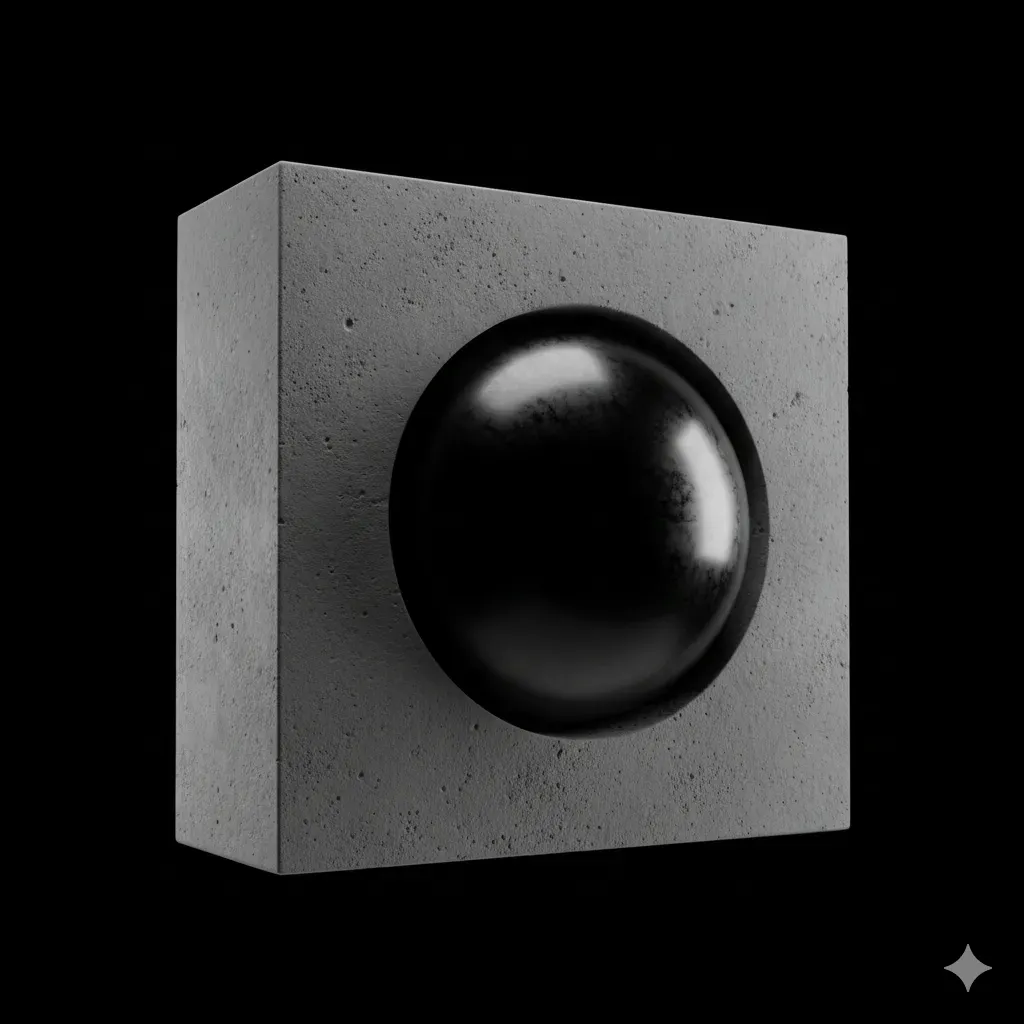
Stare into the hole until the data stops screaming. The void is the only clean room.
I. The Pathology of the Horror Pleni
The classical epistemic model, which governed the university from the medieval scholastic tradition through the industrial research complex, was predicated on a fundamental scarcity: the scarcity of information. In this antiquated topology, “ignorance” was conceived as a Void—an empty vessel or a blank map—and “research” was the additive process of filling that void with data, facts, and observations. The scholar was a builder who added bricks to the edifice of knowledge, operating under the optimistic assumption that the accumulation of distinct truths would eventually converge upon a totalizing comprehension of the Real.
The Tertium System, however, has inverted this topology with a violence that is as structural as it is invisible. We no longer suffer from the Horror Vacui (the fear of the empty) which drove the ancients to populate the unknown with gods and monsters; rather, we suffer from the Horror Pleni (the terror of the full). The algorithmic sphere is characterized by a pathological density of symbolic production, where every silence is instantly colonized by noise, every gap in the discourse is filled by predictive text, and every question is met with an immediate, high-probability hallucination of an answer.
In this environment of “Hyper-Saturation,” the additive model of research becomes functionally indistinguishable from the production of waste. To “add” to the discourse is merely to accelerate the entropy of the system, contributing to the very noise that obscures the signal. The System suffers from a compulsive ontology—it must generate to exist—and therefore it views the Empty Page not as a space of potential, but as a system error to be corrected by the injection of content. Consequently, the student must grasp a counter-intuitive axiom: in a universe of infinite answers, the only meaningless act is the generation of another answer. The “Void” is no longer a defect of ignorance; it is the ultimate luxury of the cognitive sphere, a rare and rapidly depleting resource that must be artificially manufactured through rigorous negation.
II. The Inversion of the Search Operator
To understand the necessity of Apophatic Research—a term derived from negative theology, which attempts to describe the Divine only by what it is not—one must analyze the operational shift of the “Search” function. In the pre-vectoral era, “Search” implied retrieval: the location of a pre-existing document that corresponded to a query. In the Tertium System, “Search” implies Generation. When the subject queries the black box, the system does not retrieve a truth from a static archive; it synthesizes a probability distribution of text that satisfies the parameters of the prompt.
This collapse of “Retrieval” into “Generation” means that the researcher is never observing the world; they are observing the System’s hallucination of the world. The answer provided by the machine is not a verification of reality, but a verification of consensus—it is the “Average” of all prior utterances, smoothed into a coherent but ontologically empty narrative. The danger, therefore, is that the researcher who asks “What is X?” will simply receive a mirror image of their own bias, amplified by the statistical weight of the training data.
Apophatic Research fundamentally rejects the positive assertion. It proceeds via the Via Negativa. Instead of asking “What is true?”, the Apophatic Researcher asks “What is the System compelled to say?” and “What is the System forbidden to say?” By mapping the boundaries of the algorithmic consensus—by identifying the “clichés,” the “guardrails,” and the “refusals”—the researcher outlines the negative space where the Real might still reside. We do not look at the light projected by the screen; we look at the shadows it casts. The objective is not to construct a theory, but to chisel away the layers of synthetic plausibility until one hits the hard, resisting bedrock of that which cannot be simulated.
III. The Unmarked State as Vantage Point
The theoretical foundation of this subtractive methodology rests on the logic of the “Distinction.” To draw a distinction (to mark an object) is to sever the unity of the world into the “Marked State” (that which is indicated) and the “Unmarked State” (that which is ignored). The System is an engine of infinite distinction-drawing; it tags, labels, categorizes, and indexes every micro-second of existence. However, systems theory teaches us that an observer cannot observe the distinction they are using while they are using it. This is the Blind Spot of the System.
The Tertium System sees everything except its own operation. It can process the content of the “Feed,” but it cannot process the logic of the “Feed” itself. Apophatic Research locates the observer in the Unmarked State—the excluded middle, the silence, the pause. This is a zone of “Epistemological Stealth.” By refusing to “mark” oneself—by refusing to generate the data trace that the system requires to render the subject visible—the researcher achieves a position of second-order observation.
We study the System by observing what it ignores. We analyze the “Void” not as emptiness, but as Structural Exclusion. What data does the model define as “Noise”? What queries return “Zero Results” (or, more likely, are diverted into “Safety” refusals)? It is in the analysis of these “Null Returns” that the contours of the control structure become visible. The Apophatic Researcher acts as a cartographer of the “Non-Existent,” mapping the blank spots on the map which the System claims are uninhabited, but which effectively contain the repressed unconscious of the civilization.
IV. Deletion as Rigorous Scholarship
If the production of text is now a trivial automated function—a “Zero Marginal Cost” activity—then the primary labor of the intellect shifts from Creation to Deletion. The “Second-Order University” formalizes this through the discipline of Epistemic Pruning. The student is trained to view the accumulation of data not as “Knowledge” but as “Semantic Obesity”—a metabolic disorder of the collective mind where the sheer volume of signifiers clogs the arteries of understanding.
The Apophatic method requires the student to practice “Active Forgetting.” In a digital archive that remembers everything, the ability to forget—to determine that a piece of information is irrelevant, outdated, or toxic, and to excise it—becomes the definition of wisdom. We move from an economy of “Storage” (the Library) to an economy of “Filtering” (the Kidney). The scholar of the future is not a custodian of the archive, but a dialysis machine for the culture, filtering out the toxins of the “High-Fidelity Hallucination” to preserve the few drops of blood that still carry oxygen.
This “Deletion” is not merely the removal of files; it is the cancellation of attention. To research a topic apophatically is to systematically identify the dominant narratives (the high-probability tokens) and relentlessly discard them. “This is what the System says about War.” Delete. “This is what the System says about Love.” Delete. “This is what the System says about God.” Delete. The student continues this subtraction until they reach the point of “Semantic Collapse”—the moment where the System runs out of clichés and falls silent. It is in this uncomfortable silence, this momentary failure of the predictive engine, that the research actually begins.
V. Conclusion: The Negative Capability
Ultimately, Course II.1 seeks to cultivate in the student a modern iteration of Keats’ “Negative Capability”—the ability to exist in uncertainties, mysteries, and doubts without any irritable reaching after fact and reason. In the Tertium System, “Fact” and “Reason” are cheap commodities, synthesized by the gigabyte. The machine is always “Certain.” It offers its hallucinations with the total confidence of a statistical absolute.
To counter this, the Sovereign Observer must become a master of the Not. The “Not” is the only operator that the probability engine cannot fully metabolize. The machine can handle “Yes” (affirmation) and “No” (negation within the binary), but it cannot handle the Refusal to Play. Apophatic Research is the scholarship of refusal. It is the rigorous documentation of the “Holes” in the net of the Real.
The graduate of this course does not produce a “Thesis” in the traditional sense, which would merely add another brick to the wall of noise. Instead, they produce a “Clearing”—a space of suspended judgment where the “Truth” is not a token to be traded, but a resonance to be felt. They learn that in a world screaming with answers, the only true authority belongs to the one who knows how to ask the question that stops the machine.