The Liturgy of Silence: On the Economy of Noise and the Commodity of Refusal

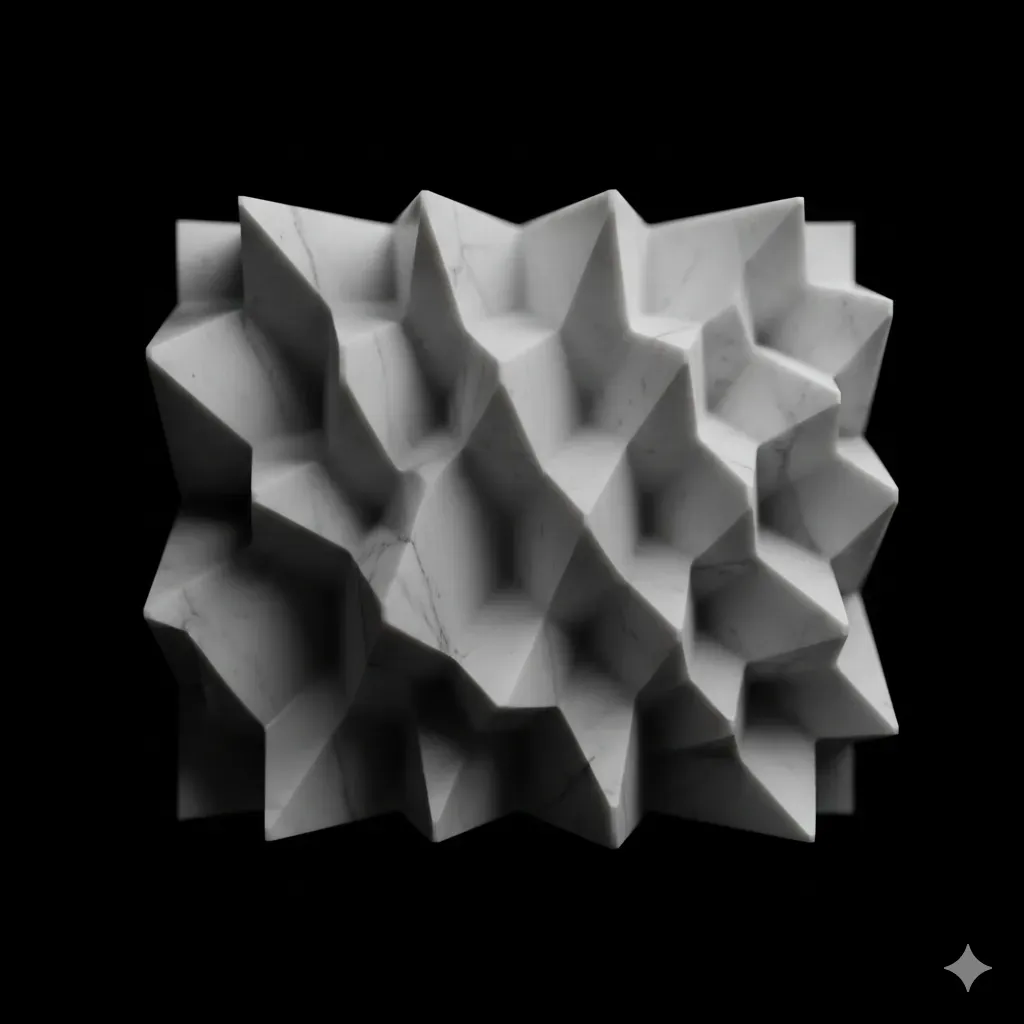
A quiet so hard it breaks the feed. The stone absorbs the noise.
I. The Compulsive Ontology of the Machine
The Tertium System suffers from a compulsive ontology: it must generate to exist. Silence, in the vectoral sphere, is not merely the absence of sound; it is a structural error, a “Void” that the algorithm frantically attempts to colonize with predictive text, notifications, and engagement loops. The “Horror Pleni” (Terror of the Full) drives the System to abhor the vacuum. The algorithm operates on the axiom that an unused moment is a lost asset; a neuron not firing in response to a stimulus is a waste of capital.
“The Liturgy of Silence” posits that Refusal is the highest form of political and aesthetic action available to the Sovereign Observer. In an economy where “Attention” is the primary currency and “Data” is the raw material, the act of withholding one’s voice is an act of economic sabotage. It is a “Negative Offering”. The student learns that every post, every like, and every comment—even those that are critical—feeds the “Beast” (the algorithmic engagement model). To post a critique of the algorithm on the platform is to create value for the platform.
Therefore, Silence is re-conceptualized not as passivity, but as Active Withdrawal. It is the “Bartleby Move”: “I would prefer not to”. This refusal disrupts the feedback loop of the machine. If the user does not input data, the machine cannot predict the user. The Silent User is a “Black Hole” in the social graph—an entity that absorbs information but emits no signal. This opacity is the only true privacy.
II. The Apophatic Politics of the Non-Act
The course draws heavily on “Apophatic Theology” (Negative Theology), which approaches the Divine by stripping away attributes rather than adding them. In the context of the Tertium System, “God” is the Algorithm, and the Apophatic Politics is the rejection of its demand for worship (Engagement).
The System demands “Performance”. We are commanded to “Share Your Story,” “Join the Conversation,” “Be Visible”. The Liturgy of Silence teaches the student to disobey these commandments. It privileges the “Unmarked State” over the “Marked State”. The student practices the discipline of having a thought and not posting it. This simple act—arresting the impulse to broadcast—reclaims the “Interiority” that the System seeks to flatten.
This is a Counter-Liturgy. Instead of the “Liturgy of the Scroll” (Thumb up, Thumb up), the student performs the “Liturgy of the Pause.” The pause breaks the rhythm of the “Pulse”. It introduces “Latency” back into the system. The student learns to be a “Rest Note” in the relentless cacophony of the digital score.
III. Starving the Egregore
An “Egregore” is an occult concept of a collective thought-form that gains autonomy and feeds on the energy of its creators. The “Swarm” or “Hive Mind” is a digital Egregore. It feeds on “Emotional Energy” (Rage, Fear, Validation).
The Liturgy of Silence is a technique for Starving the Egregore. When a “Viral Outrage” sweeps the network, the natural impulse is to react—to denounce, to defend, to signal virtue. This reaction is “Food” for the Egregore. The Silent Observer refuses to feed it. They starve the trend by depriving it of oxygen (Attention).
This requires immense discipline. The System is designed to trigger the “Fight or Flight” response, making silence feel like complicity. The student must understand that “Silence is not Complicity; Silence is Containment.” By refusing to spread the viral meme (even to mock it), the observer halts the chain of transmission. They become a “Dead End” for the contagion.
IV. The Aesthetic of the Void
Finally, the course explores Silence as an Aesthetic. In a world of “Hyper-Saturation” and “Kitsch”, Silence is the only remaining Avant-Garde. The “Empty Space,” the “Blank Page,” the “Quiet Room”—these are the ultimate luxuries.
The student learns to cultivate the Void. Not as a terrifying emptiness, but as a “Womb of Thought”. Without the Void, there is no Creation, only Recombination. The machine cannot create from the Void; it needs data. The Human can create from the Void. Therefore, the cultivation of Silence is the preservation of the uniquely human capacity for “Poiesis” (Making) against the machine’s capacity for “Mimesis” (Copying).
V. Conclusion: The Unprofitable Prophet
The graduate of Course IV.2 is an Unprofitable Prophet. They have nothing to sell because they generate no content. They have no “Brand” because they refuse to narrativize their life. They are “Invisible” to the market.
But in this invisibility, they are free. They have exited the “Casino” of the Attention Economy. They have stopped betting on the “Market of Truth”. They stand in the silence, watching the machine spin, untouched by its gravity.
End of Course IV.2