The Atrophy of the Limbs: The Teratogenic Effects of Cognitive Sedatives on the Morphogenesis of Intellect

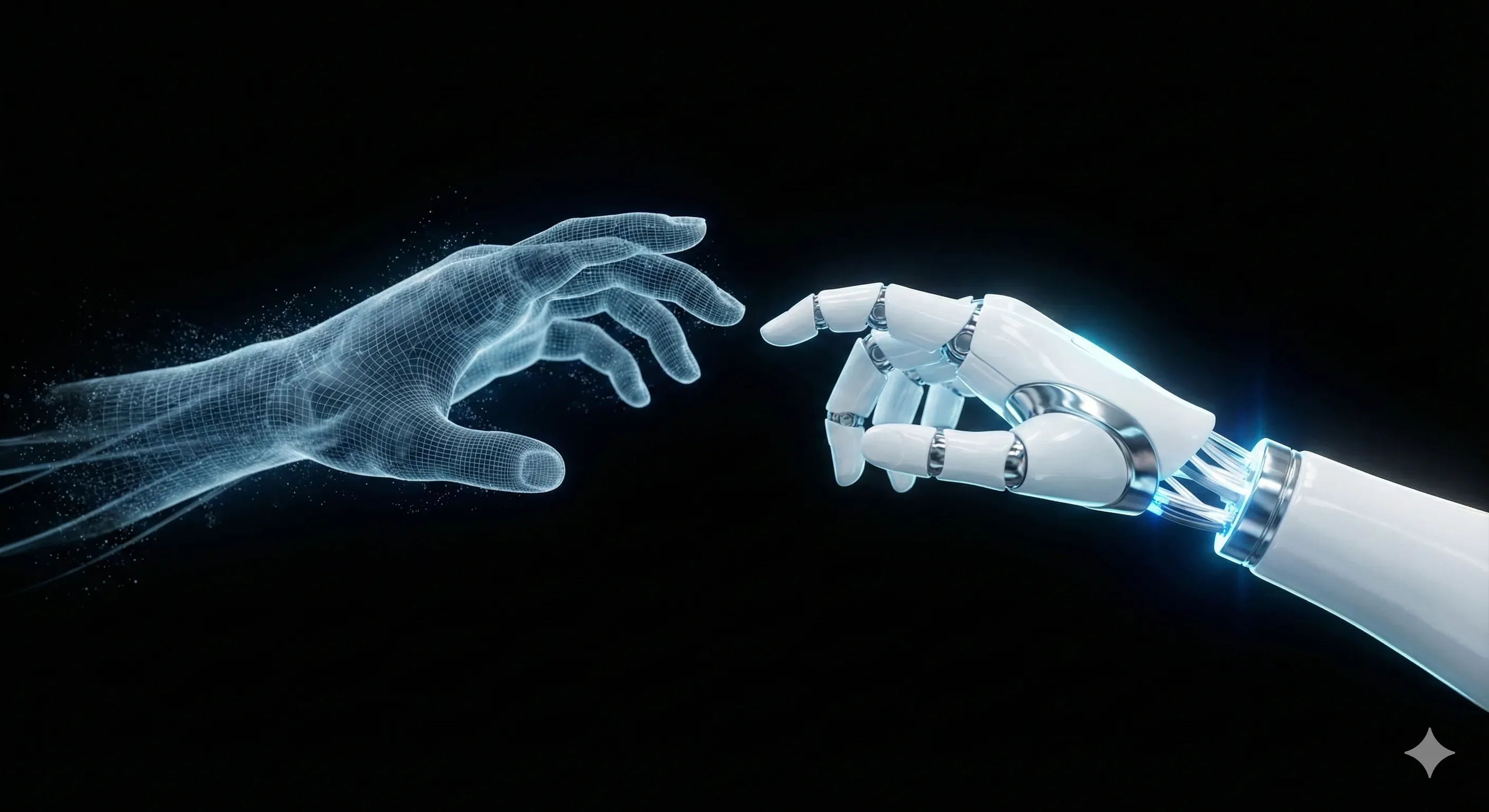
The prosthetic is so comfortable that the muscle forgets it was ever designed to move.
The medicine tasted of mint and relief. In the late 1950s, Thalidomide was marketed to expectant mothers as a cure for the “morning sickness”—the structural friction of the biological system adjusting to a new life. It was a miracle sedative, promised to be perfectly safe. It provided an escape from the nausea. The tragedy was not that the drug failed; it was that it worked with such clinical precision. It suppressed the maternal system’s signals so effectively that it also silenced the metabolic information required for the morphogenesis of the fetus. The result was a generation born with phocomelia—seal-limb deformity. The limbs were not missing; they were simply never signaled to grow. The load-bearing structure was bypassed in the rush for comfort.
In the complex architecture of a human being, friction is the signal. Resistance is the catalyst for form.
In 2026, we are administering a cognitive Thalidomide. We call it “AI-Integrated Learning.”
We must be honest about the morning sickness of education. Learning sucks. It is high-friction, metabolic labor. It is the nausea of a difficult calculus problem, the anxiety of a blank page, and the crushing weight of ambiguity. The desire for relief is not a moral failing; it is a structural drive. The LLM-tutor is the ultimate sedative. It removes the discomfort of thought with the same efficiency as a pharmaceutical.
The isomorphism is precise. Learning is a process of cognitive morphogenesis. To build the “limbs” of intellect—specifically the recursive attention span or the ability to hold two contradictory ideas in suspension—requires resistance. The “struggle” of the student is a developmental signal. When the AI performs the Gradient Descent for the student—when it provides the summary, the thesis, and the code—it silences the signal.
We are raising a generation of “Seal-Limb” intellects. Their cognitive limbs are not missing—they have access to more tokens than any generation in history—but they are structurally incapable of using them. They have the “Hand” of the API, but they lack the “Bone” of the first principles. They can generate a 2,000-word essay in ten seconds, but they cannot explain the underlying logic of a single sentence. They have been sedated into atrophy.
The teratogenic effects are invisible during the “Inference” phase, but the structural failure is already appearing in the material stress tests. We see it in the collapse of deep reading and the evaporation of long-term memory. We are building a “User Interface” for reality that is so smooth and so coherent that it requires no structural effort to navigate. And because it requires no effort, it produces no growth.
The evangelists of EdTech argue that we are “liberating” the student from “drudgery.” This is a category error. The calculator replaced the mechanical execution; the LLM replaces the structural intent. Using an LLM to learn is like using a forklift to go for a run. You reach the destination, but the muscle never fires.
We are weaving this material into the walls of the university because it “works.” It produces higher grades and faster throughput. But it is producing a generation of cognitive amputees. When the next crisis arrives—the one the model hasn’t been trained to solve—we will find that we have sold our ability to stand for the comfort of the sedative.
The building is full of students. None of them can move the weights.
Previous: The Vertical Pipe
Next: The Plastic Egg
View Full Series: The Isomorphic Atlas