The Liquidity of Meaning: Bundling Toxic Data into the Triple-A Benchmarks of Model Collapse

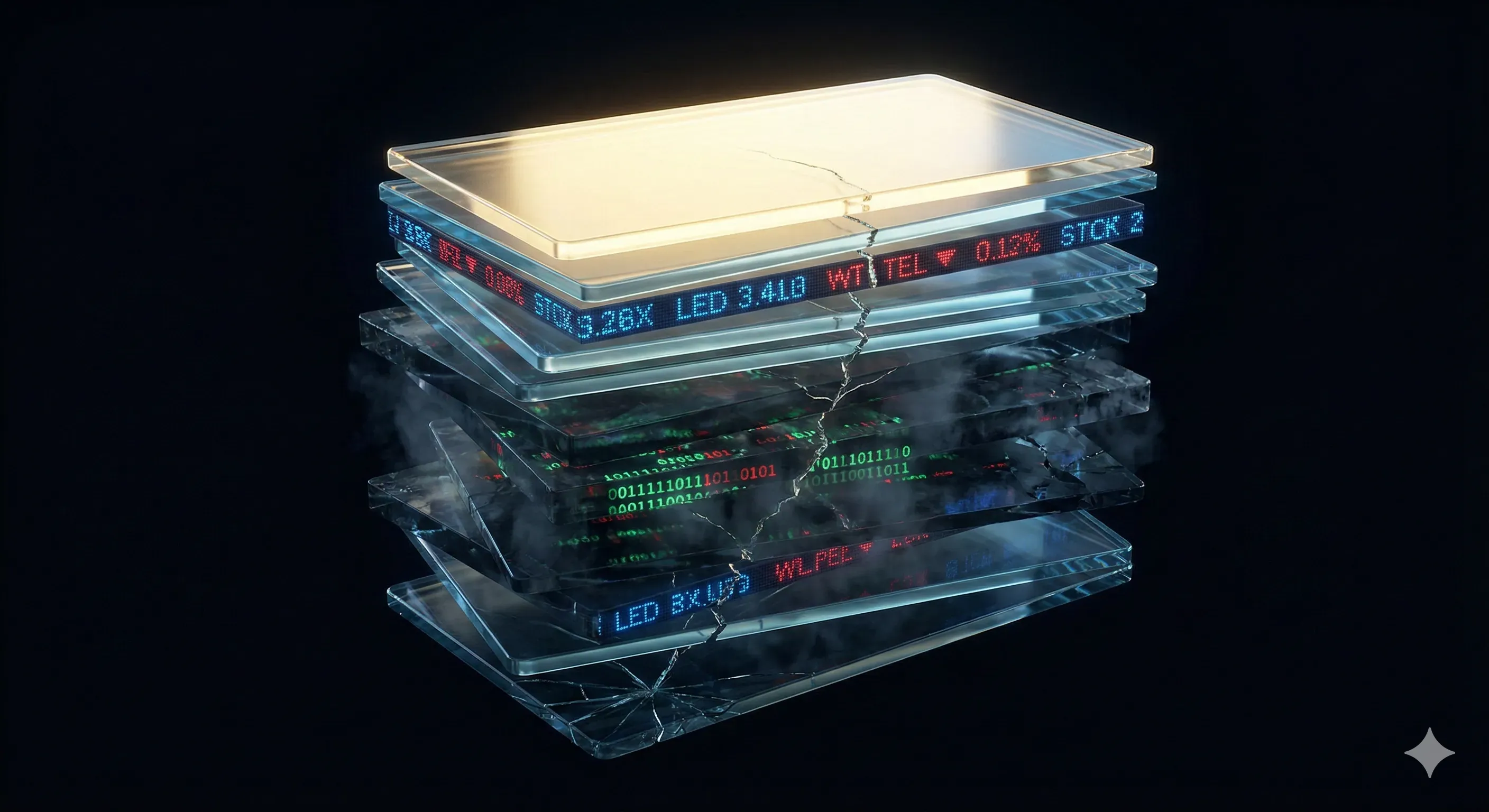
The tower stands tall only because we agreed not to look at the cracks in the glass foundation.
The sound on the floor of the Bear Stearns trading desk in early 2007 wasn’t a bank run; it was the quiet, rhythmic clicking of spreadsheets recalculating the “Alchemy.” The process was clinical: gather thousands of low-quality, high-risk assets—subprime mortgages from debtors with no income and no jobs—and bundle them into a single instrument. These bundles, known as Collateralized Debt Obligations (CDOs), were then sliced into “tranches.” Through the alchemy of statistical modeling, the top-tier “Senior Tranche” was rated Triple-A. The assumption was that while a single debtor might fail, a thousand uncorrelated failures were statistically impossible.
The ratings agencies were not analyzing the houses; they were analyzing the math of the bundle. They were modeling a map of a territory that had already been vacated. When the underlying toxicity—the actual inability of people to pay their debts—began to seep up through the tranches, the complexity that had created the value became a conductor for contagion. The “Senior Tranches” were revealed to be as worthless as the subprime noise at the bottom. The liquidity of the market—the shared belief that a dollar was worth a dollar—simply evaporated.
In 2026, we are repeating the bundle.
The “Foundational Model” is the CDO of the informational age.
To build an LLM, the labs have aggregated billions of “subprime” informational assets: unverified tweets, automated SEO slop, and the rambling output of earlier, smaller models. This is our “toxic data.” Individually, these tokens are worthless—low-resolution, prone to error, and functionally illiterate. But by bundling them into a trillion-parameter transformer, the labs claim to have created a Triple-A cognitive instrument.
The “Ratings Agencies” of the AI bubble are the benchmarks—MMLU, GSM8K, HumanEval. These metrics provide the veneer of objective safety and capability. Venture capitalists look at the benchmark scores and see a “Senior Tranche” asset. They assume that the complexity of the “bundle” has somehow neutralized the toxicity of the “Training Data.” They believe that if you aggregate enough unverified human chatter, you produce “Intelligence” as a deterministic output.
The isomorphism is chilling. In 2008, the flaw was the assumption of “low correlation.” Today, the AI models assume that “truth” is a statistical aggregate. They assume that if you have enough data points, the “truth” will naturally emerge as the most frequent pattern.
We are already seeing the “Model Collapse”—the informational equivalent of the subprime default.
As the internet becomes saturated with synthetic text, the models are training on the output of their own kind. This is the ultimate toxic asset. When a model consumes synthetic “slop” to create more “slop,” the toxicity seeps up from the bottom of the raw data to infect the final answer. The “Senior Tranche”— the System Prompt or the “Fine-Tune” that is supposed to be safe and accurate—starts to show the same stuttering, hallucinatory errors as the subprime data it was built upon.
The contagion is spreading. We are integrating these “Triple-A” models into law, medicine, and engineering. We are solvent only as long as we don’t look too closely at the underlying assets.
The “Minsky Moment” for AI will not be a hardware failure. It will be the moment when the “liquidity of trust” dries up. It will be the day when a doctor realizes that the “Senior Tranche” medical summary was a hallucinated bundle of toxic noise.
In 2008, the government provided liquidity to the banks. In 2027, who provides liquidity to meaning? When you can’t distinguish between a human thought and a statistical aggregate of toxic data, the market for “truth” freezes. We are not entering a new age of intelligence; we are entering the Greater Informational Depression. The spreadsheets are still clicking, but the houses are empty.
Previous: VThe Latin Filter
Next: The Grid and the Ghost
View Full Series: The Isomorphic Atlas