Informational Eutrophication and the Synthetic Yield of the LLM

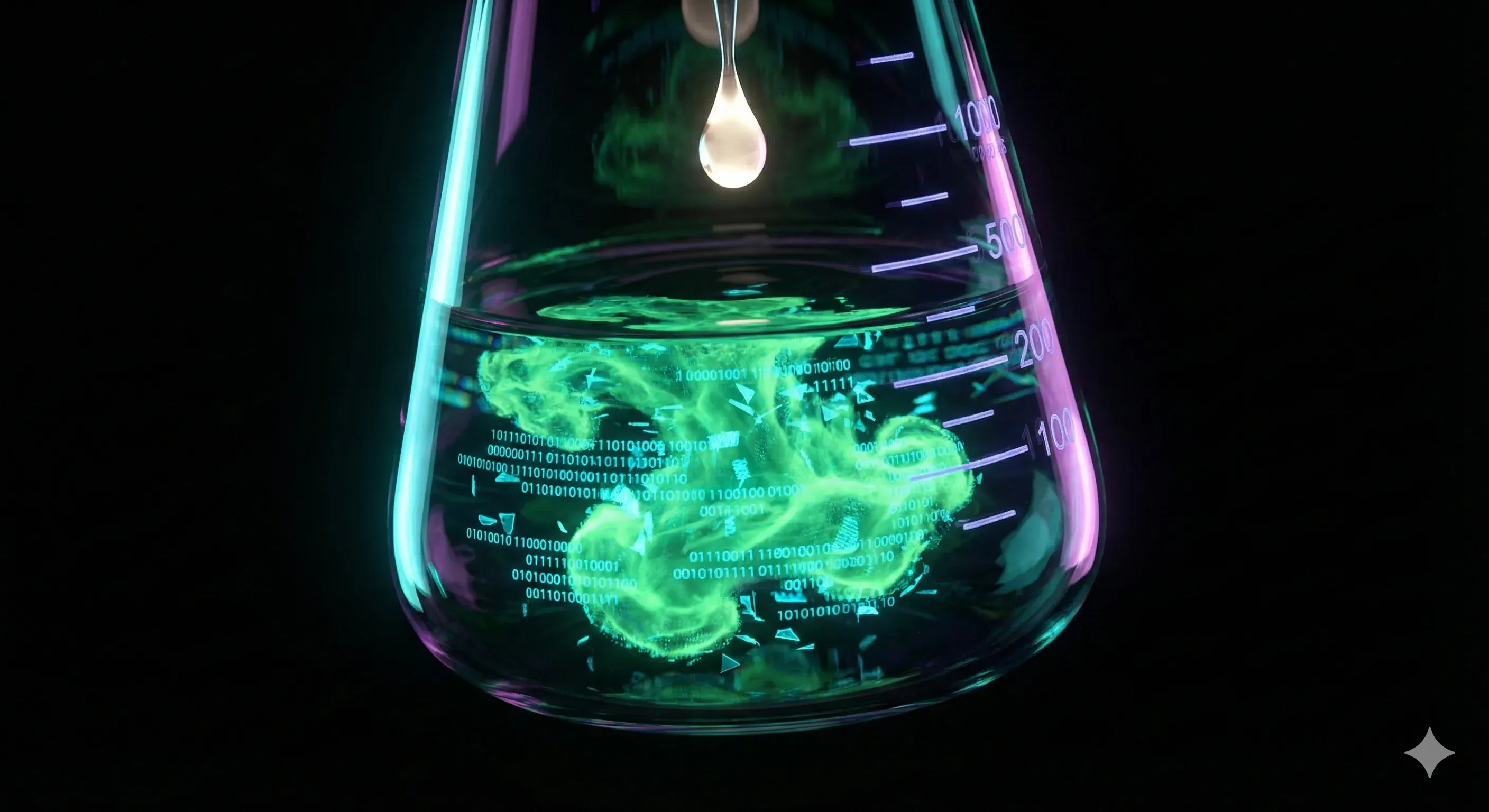
We have engineered a yield so massive that the water itself has forgotten how to breathe.
The air in the lab at Karlsruhe smelled of ozone and scorched copper. In 1909, Fritz Haber pulled bread from the atmosphere, a chemical trick that bypassed the slow, bacterial rot of the soil. Before this, the nitrogen cycle was the hard ceiling of existence. Human population was bounded by the metabolic limit of the guano-beds. Haber’s catalyst—high pressure and a specific iron oxide substrate—broke the cycle. It allowed for a massive, unprecedented yield explosion. We are, quite literally, the ghosts of a chemical reaction. Half the nitrogen in your blood today was cooked in a pressurized kettle.
But the nitrogen didn’t stay in the fields. It was too much for the ecosystem to metabolize. It bled. It leaked past the roots and found the water table. It found the deltas. In the Gulf of Mexico, you can see the results of “Yield Optimization” from space: massive “Dead Zones”—hypoxic algal blooms where the water is so thick with synthetic life that nothing else can breathe. The fish don’t just leave; they suffocate. The water is alive, but it is sterile.
In 2026, we are applying the Haber-Bosch process to human communication. Our Inference engines are the new synthetic nitrogen.
For millennia, the production of “truth” and “meaning” was limited by the nitrogen cycle of human cognition. A book took a decade; an essay took a month. The informational soil was maintained by the slow, organic friction of research and lived experience. We were capped by the biological capacity of the brain.
The transformer model has shattered that cap. We can now pull “content” from the air at the cost of a few milliwatts per token. We are drowning in a massive, cheap surplus of text, code, and imagery. The “yield” of the internet has increased by orders of magnitude.
But as any field biologist knows, a crop is not an ecosystem.
The Loss Function of the model does not synthesize from a place of understanding; it synthesizes from a place of statistical pressure. It bypasses the “organic” labor of thought. When we use AI to generate “content,” we are not enriching the discourse; we are over-stimulating the medium. The “metis” of the human writer—the specific, idiosyncratic “error” that signifies a unique perspective—is being replaced by the “synthetic average.” The soil of the internet is becoming salt-bleached and sterile.
The result is the “Great Eutrophication.”
Look at the “Dead Zones” of our digital water table. Open the first page of a Google search results for any niche topic; it smells of the algae. It is thick with AI-generated SEO-bait, unvetted summaries, and the non-biodegradable “slop” of a thousand automated crawlers. Look at a Pinterest board for “interior design” or “concept art”—it is a bloom of synthetic perfection that is functionally breathless. The organic signal—the “light” of discovery—cannot penetrate the thick, green mat of synthetic yield on the surface.
When you query a fact today, you are increasingly wading through nitrogen-rich runoff. The search engine is no longer a tool for discovery; it is a survey of the bloom. We are ingesting the runoff in every search query, every email, and every automated summary.
The isomorphism reaches its resolution in “Model Collapse.” Just as a farm that relies solely on synthetic nitrogen eventually loses the ability to support life, a model that is trained on its own synthetic output begins to decay. The Vector Embeddings drift toward the average of the average, until the system becomes a mirror reflecting only its own chemical catalyst.
We are fed by the air, but we are starving for the soil. We have maximized the yield, but we have destroyed the ecology. Will the water ever be fit to drink again?
Previous: The Perimeter of the Commons
Next: The Latin Filter
View Full Series: The Isomorphic Atlas