The Topology of Time: On the Method of Structural Isomorphism

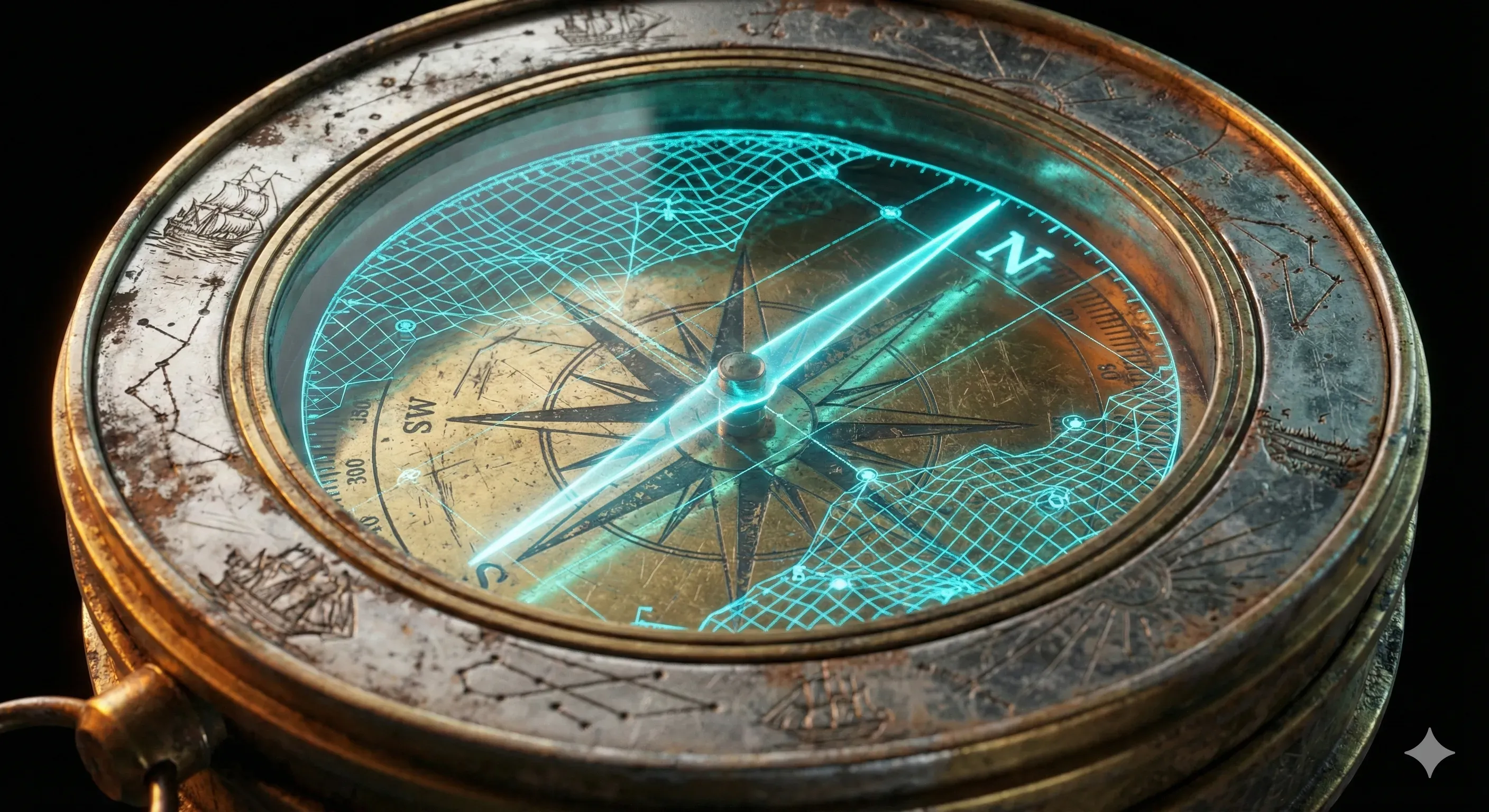
We mistake the novelty of the silicon for an escape from the geometry of the trap.
The fundamental error of the present moment is the belief that it has no history. We are surrounded by a rhetoric of “The Singularity”—a breathless, messianic conviction that the arrival of Synthetic Intelligence represents a rupture in the timeline, an event so novel and so absolute that the laws of the past no longer apply. We are told that because the substrate is silicon and the speed is light, the physics of power have been suspended. We are told that we have entered a “New Era.”
This Atlas rejects that premise.
It operates on a darker, more thermodynamic assumption: History does not repeat, but systems rhyme.
When a system organizes itself around extraction, centralization, and the optimization of yield at the expense of resilience, it settles into a specific geometric shape. It digs a groove in the fabric of reality. It matters very little whether that system is powered by a water mill, a steam engine, or a Graphics Processing Unit. The topology of the trap remains identical.
The Method: Beyond Metaphor
The essays collected in this volume deploy the method of Structural Isomorphism. This is not a literary exercise. We are not using the past as a “metaphor” to decorate the present. A metaphor is a poetic device; an isomorphism is a mathematical one. It identifies a structure-preserving map between two seemingly disparate domains.
When we map the Enclosure Acts of 18th-century England onto the Training Runs of 2026, we are not saying that “AI is like a fence.” We are saying that the economic vector is identical. In both cases, a shared resource (the Common Land / The Open Web) is legally reclassified as private property to enable a more efficient extraction of value, forcing the original inhabitants (Peasants / Creators) into a wage-labor relationship with the new owners. The content has changed (wool vs. tokens), but the form is preserved.
This method draws its lineage from the cybernetics of Gregory Bateson, who sought “the pattern which connects.” It relies on the systems theory of Niklas Luhmann, who taught us that institutions do not care about human meaning; they care about the maintenance of their own boundaries. It looks to Michel Foucault, who showed us that the Prison, the School, and the Factory were all variations of the same “Panopticon” blueprint.
By overlaying the map of the past onto the territory of the present, we achieve a specific cognitive effect: Estrangement. We strip the AI industry of its “magic.” We reveal that the “Cloud” is just a Railway. The “Safety Filter” is just a Catechism. The “User Interface” is just a Plastic Egg.
The Three Horizons
This Atlas is organized into three horizons of isomorphism, each diagnosing a different layer of the collapse.
First, we examine the Ecological Isomorphs. We look to the Haber-Bosch process and the introduction of the Nile Perch to understand the “Toxicity of Yield.” We argue that the flooding of the information ecosystem with synthetic text is not a “content boom”; it is a eutrophication event. We are poisoning the water table of truth with the runoff of efficiency.
Second, we examine the Material Isomorphs. We look to Asbestos and Plastic to understand “Delayed Lethality.” We argue that the integration of AI into our institutions is “fire-retardant”—it solves the immediate friction of administrative bloat—but it weaves a carcinogenic material into the walls that will only reveal its cost when the next generation attempts to think from first principles.
Third, we examine the Historical Isomorphs. We look to the Standard Oil Trust and the Pre-Reformation Church to understand the consolidation of power. We argue that the battle over “AI Safety” is not a technical debate; it is a theological struggle between a centralized Priesthood (The Labs) and a decentralized Laity (The Open Source movement).
The Ghost in the Machine
Why do this? Why haunt the present with the ghosts of the past?
Because the tech industry thrives on amnesia. It sells us the “New” to hide the “Old.” By framing AI as a magical, unprecedented event, they disable our critical immune systems. We do not know how to regulate “Magic.” But we do know how to regulate a Trust. We do know how to remediate Asbestos. We do know how to fight an Enclosure.
By proving that the “New” is simply the “Old” with higher resolution, this Atlas aims to return the agency of diagnosis to the reader. You are not witnessing a Singularity. You are witnessing a Land Grab. You are witnessing a Bubble. You are witnessing a Monoculture.
We have been here before. We have the maps. The only question is whether we will read them before we step off the edge.
Next: The Perimeter of the Commons
View Full Series: The Isomorphic Atlas